Showing posts with label Danube. Show all posts

Tuesday, 6 May 2014

Natural Water Retention Measures

It is one of our ongoing projects Aqua.Rekk contributes to.
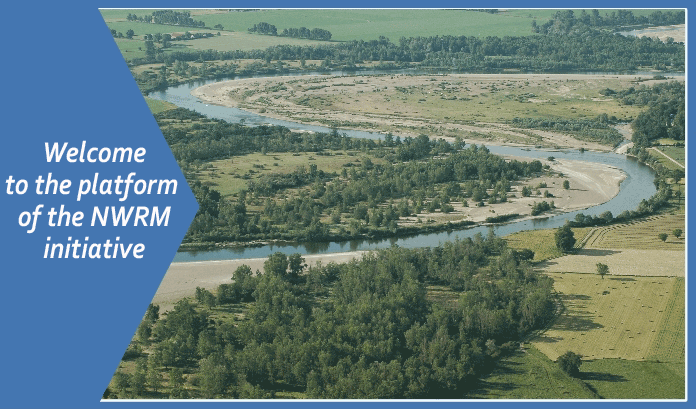
Natural Water Retention Measures (NWRM) are measures that aim to safeguard and enhance the water storage potential of landscape, soils and aquifers, by restoring ecosystems, natural features and characteristics of water courses, and by using natural processes. They are green infrastructure solutions and they support adaptation, reducing vulnerability of water resources.

The NWRM initiative is a project of DGENV for collaboratively building knowledge and promoting best practice on Natural Water Retention Measures in Europe. You can find the key concepts used and resources to help you develop your own measures in the official site of the project www.nwrm.eu . Progressively you will find a catalogue of case studies along with a practical guide to implement NWRMs.

Monday, 5 May 2014

Danube - waterway development CBA

How to step forward?
By 2006, the Hungarian-Slovak intergovernmental negotiations, aimed at implementing the 1997
ruling of the International Court of Justice on the Gabcikovo-Nagymaros Project, appeared to
reach a stalemate. As a last resort, on 5 October 2006 the parties agreed to prepare a Mutual
Environmental Study. Over the course of 2007 and 2008, the parties consulted on further details of
the Study and established a bilateral Steering Committee to oversee the preparation of the study.
At the end of 2008, the Hungarian government allocated the necessary financial resources, and
research in the Hungarian sector was commenced in early 2009. Although the analysis focused
predominantly on examining the hydrological and ecological aspects of rehabilitation in the
Szigetköz, the scope of the study extended to the entire waterway route section of the River
Danube financed by investment from the Gabcikovo-Nagymaros (Bős-Nagymaros ) project. As part
of the study, a cost-benefit analysis was carried out that compared the implications and consequences of other river regulating measures to those of the Gabcikovo-Nagymaros Barrage System Plan.

This paper will condense down and summarize the findings of a number of previous studies, focusing on the implications for inland water transportation planning. As opposed to the narrower scope of previous studies, the aim of this paper is to present a broader, more coherent report; one that places more emphasize on inland water transport, ultimately aiding more informed decision making in relation to the integrated use of the River Danube.

http://www.rekk.eu/images/stories/letoltheto/summary_rekk_danube_navigation_cba.pdf
UNDP/GEF - Danube Regional Project

The management of the UNDP/GEF funded research project on municipal water and wastewater tariffs and effluent charges in seven countries of the Danube River Basin belongs to the professional experience of our colleagues at their previous job (MAKK). They coordinated the work of national experts, ensuring that common methodology is used in all study countries and practically useful results are achieved.

During the project a microeconomic model called ASTEC was developed. ASTEC is capable of broadly examining the interaction of a water and wastewater utility’s service prices with investment strategies, cost structures, customer behaviour and physical conditions. ASTEC has been successfully used in many cases as a decision support tool to test reforms related to new tariffs designs, investment strategies and corporate changes.

One of the results of the project is a comprehensive overview of the status of municipal drinking water supply and wastewater treatment in seven Danube countries: Bosnia and Herzegovina, Bulgaria, Croatia, Czech Republic, Hungary, Romania and Slovakia. The paper assesses the theory and practice of water and wastewater service pricing, and effluent charge designs, as well as proposals for reforming water utility bookkeeping, financing, management and institutions. This is a valuable handbook for policy-makers, utility managers, and municipal decision-makers. Or anyone interested in the efficient provision of public water-related services and future utility challenges for reaching full-scale effluent reduction.

Another result of the project is a volume of papers consisting of three documents for each of the above seven countries (21 documents total) covering water and wastewater systems. The first are national profiles discussing the legal, regulatory, economic and institutional setting of the sector, data about water and wastewater services and service providers, and key policy issues and challenges facing the water and wastewater service sectors of each country. The second document presents a case study covering one particular water utility in each country, including the results of modelling reform proposals appropriate to that utility with the ASTEC model. The third document is a summary focusing on the most important issues discussed in the national profile and the case study.